
Safe work on bus roofs with elevating roof platforms
Servicing modern buses places ever higher demands on safety, ergonomics and access. Air conditioning, battery packs, antennas and hatches are often mounted on the roof, meaning work several metres above the floor along the whole vehicle.
Working at height requires the right protection
Fall risk should be designed out during planning. Collective fall protection comes first; personal fall arrest equipment only when collective protection is not possible.
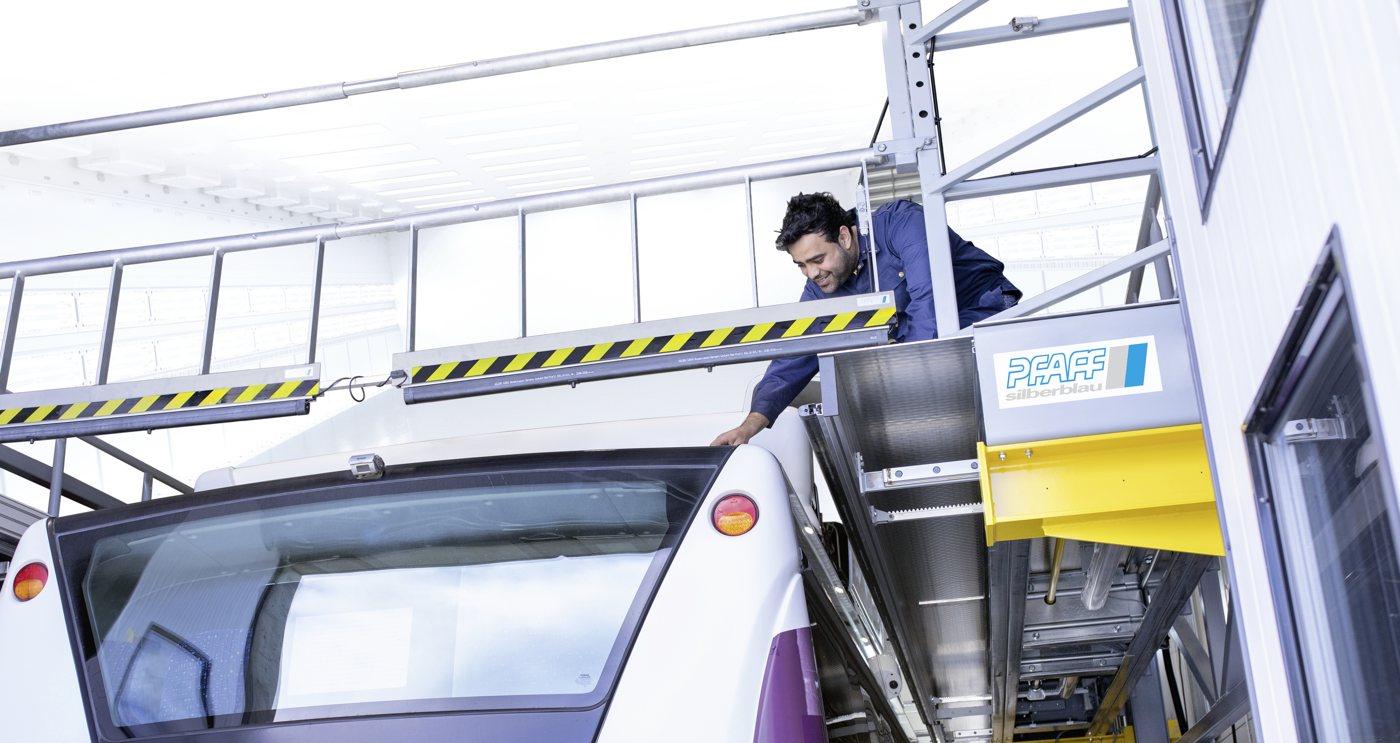
A fixed or integrated roof platform gives the technician a protected working area with railings, walkway and safe access around the vehicle instead of solving every task with a harness and line.
Adapted to bus models and depot layouts
Buses differ in height, width, length and body shape. Our telescopic platforms are therefore engineered around the vehicles, the building and the workshop flow, in different lengths, heights and configurations.
A common solution uses elevating sections with telescopic segments extending towards the bus from both sides, closing the gap between platform and vehicle.
- Railings on all sides and adjustable rear gate
- Separate walkway at the front end
- Telescopic movement with 500 mm stroke and safety edge towards the vehicle
More efficient service in bus depots
With the right platform in place technicians reach the roof quickly, work along the whole bus and avoid spending time on temporary arrangements.
The working surface is stable and predictable from one vehicle to the next, giving a repeatable and safer service flow.
Need advice?
Tell us about your vehicles, premises and workflows — our engineers will specify the right lifting solution.